The Search for Birna Brjánsdóttir: When Iceland Searched Together
In January 2017, the search for Birna Brjánsdóttir became one of Iceland's most extensive rescue team operations, bringing together volunteers, police, dog teams and specialist search units.
The search for Birna Brjánsdóttir began as a search for a missing young woman after she was last seen on CCTV in central Reykjavík in the early morning of 14 January 2017. In the days that followed, the search grew from a focused city search into a large, coordinated effort across the capital area, Hafnarfjörður, Heiðmörk, Reykjanes, Strandarheiði and the coastline near Selvogsviti.
This story is not about the criminal case. It is about the search: the volunteers who were called out, the methods they used, the uncertainty they worked under, and the way Iceland’s search and rescue system responds when there are few clear answers and time matters.
The Last Known Point
The first organized search work centred on the last known point connected to Birna: the area around Laugavegur 31. In a wilderness search, teams often begin with terrain, weather, distance and likely routes. In a city search, the questions are different. Searchers have to think about courtyards, open basements, waste areas, narrow gaps, public spaces, camera coverage and the movement of people through a dense urban environment.
On the evening of 15 January, rescue teams formally became involved in the case. A tracking dog, Perla, was used to follow Birna’s trail from the nightclub Húrra. The trail grew cold near Laugavegur 31. Perla was also used near Flatahraun in Hafnarfjörður, where Birna’s phone had connected to a cell tower.
The dog work gave the search an important starting point, but it also showed how difficult the task was. In a city, scent can be affected by traffic, weather, surfaces, people and time. A dog team can give direction, but it cannot remove uncertainty.
Searching the City
On 16 January, specialist search personnel from ICE-SAR were called out around 10:30 in the morning. The first rescue team members were in central Reykjavík around 11:00. Searchers worked within a 300 metre radius of Laugavegur 31, checking places where a clue might be missed by someone passing by.
They searched courtyards, open basements, refuse rooms, bins and other semi-open spaces. This kind of work is slow and disciplined. It is not dramatic in the way people sometimes imagine search and rescue. It is careful, repeated, often uncomfortable work, built on the idea that small details matter.
Later that day, more searchers were called to Flatahraun in Hafnarfjörður. The setting changed from tight city blocks to a wider area where open-ground search methods became more relevant. At the height of the operation that day, around 60 people were searching, with roughly half in Reykjavík and half near Flatahraun.
When Technology Moves a Search
That evening, around 120 people searched an area near Vífilsstaðir and Kaldárselsvegur. That search was shaped by police technical work and the need to test possible routes against the information available at the time.
In modern missing person searches, phone data, CCTV, witness accounts and vehicle movements can all affect where rescue teams are sent. Searchers may not know the full investigative picture, but they work from the assignments they are given: clear this area, check this route, exclude what can be excluded, and report anything that may matter.
The search shifted again when a member of the public found a black Dr. Martens shoe near Hafnarfjörður harbour. The discovery changed the weight of the search and led to an extensive operation in and around the harbour.
The Harbour Search
During the night into 17 January, teams searched at Hafnarfjörður harbour. Police special units and rescue teams were involved. Divers searched in the harbour, and an inflatable boat was used on the water. Later, the second shoe was found.
The harbour search was a difficult part of the operation. It brought together water, darkness, evidence work, public attention and the emotional pressure that comes when a search moves from hope toward harder possibilities. For volunteers, those moments demand focus. The task is to keep working carefully, even when the atmosphere around the search becomes heavier.
The search at the harbour ended before morning without the decisive answers everyone hoped for.
Excluding Ground
From 18 to 20 January, the work moved into a wider process of search and exclusion. Areas were assessed against possible movements of a red Kia Rio and a period of time that still had to be explained. Police and search personnel drove tracks and paths in a similar vehicle to understand where such a car could realistically have gone.
This is one of the less visible parts of search and rescue work. It can look like driving roads, checking tracks, recording access points and marking areas as searched or unlikely. But exclusion is vital. In a large search, every area that can be responsibly ruled out helps narrow the field and makes the remaining work more focused.
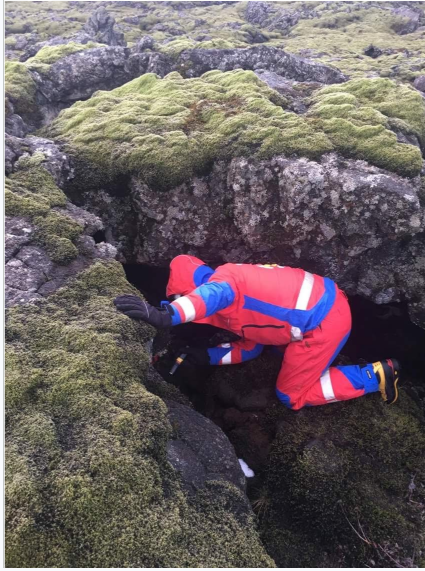
Strandarheiði toward Keilir was among the difficult areas discussed in the search. Rescue teams had already spent days working through demanding ground. As the search expanded, rescue team members from South and West Iceland were called in for the weekend effort.
By 21 January, contemporary reporting described the operation as one of the most extensive searches carried out by Icelandic rescue teams. At that point, 292 rescue team members had taken part.
A National Response
On 22 January, Birna was found deceased on the shore near Selvogsviti. By the end of the search, reports stated that more than 700 rescue team members had been involved.
Numbers like that can sound abstract, but each number represents a person who left home, work or family to search. Some walked city streets. Some checked rough ground. Some worked near water. Some supported logistics, communications and coordination. Some searched at night. Some returned for another shift.
Large searches depend on that shared system: trained volunteers, police coordination, dog teams, divers, boats, specialist search personnel, local knowledge and the ability to scale quickly when the search area grows.
What The Search Shows
The search for Birna remains part of Iceland’s collective memory because it touched the whole country. For search and rescue teams, it also showed the complexity of a modern missing person search: urban work, technical clues, tracking dogs, water searches, vehicle-route analysis, wide-area exclusion and the management of hundreds of volunteers over several days.
It also showed something quieter. Search work is not only about finding. It is about showing up when someone is missing, giving structure to uncertainty, and doing the careful work that families, police and communities depend on.
Some searches end with relief. Some do not. But the work still matters. In this search, hundreds of volunteers helped carry the weight of a national effort, one assigned area, one checked route and one difficult shift at a time.
— Skagfirðingasveit Search and Rescue Team
Story Information
Location: Reykjavík, Hafnarfjörður, Reykjanes and Selvogsviti, Iceland
Theme: Missing person search and rescue coordination
Status: Published story