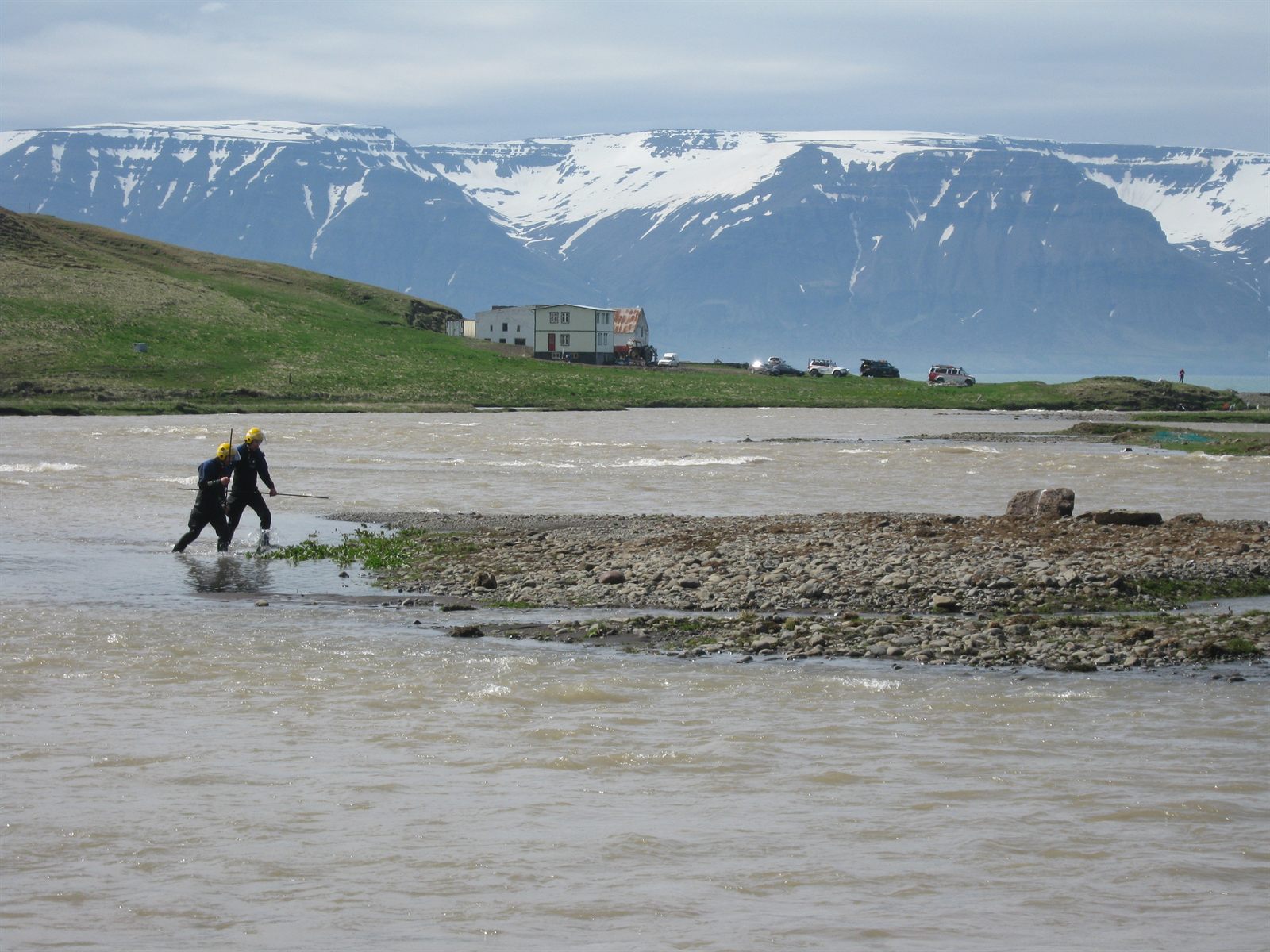
Hjaltadalsá: A Search in Floodwater
In June 2013, a callout to Hjaltadalsá became one of those missions that stays with a rescue team long after the search is over.
On 11 June 2013, Jón Ólafsson from Kárastaðir fell into Hjaltadalsá. The river was in heavy flood, brown with silt and stronger than many people in the area could remember seeing it. What began as an urgent rescue call quickly became a large and difficult search in one of the most demanding environments volunteers can face.
Skagfirðingasveit was called out with a priority response. The team brought a rubber boat and equipment connected to water rescue and search work. The first responders began searching from the riverbanks, while lookouts were placed at bridges downstream. A boat was launched from Kolkaós, incident command was set up near the old bridge by Sleitustaðir, and regional coordination gathered at Hólar.
As the scale of the situation became clear, all rescue teams in Area 10, Skagafjörður, were called out. Teams from Area 9 in Húnavatnssýslur and Area 11 in Eyjafjörður later joined the search. The Icelandic Coast Guard helicopter was requested, bringing a thermal camera and an aerial view over the river, the estuary and the coastline.
Searching Moving Water
Hjaltadalsá was not a clear river that day. It was fast, swollen and opaque. Searchers worked along the banks, checked likely holding points and pools, and focused attention on the estuary and the sea beyond it. Rafting guides were also asked to assist and were given the freedom to choose the section they felt they could search most effectively.
One attempt was made to close the river mouth with a net. The helicopter helped carry a line across the water, and the line was secured to vehicles on land. The current was so powerful that the vehicles began to move with the net, and the attempt had to be abandoned.
For those watching from the bridges, the work was also difficult. Staring into fast, brown water for long periods, looking for any sign of a person, takes both concentration and strength. In missions like this, the physical search and the emotional strain are never far apart.
A Search That Grew
Through the evening and night, searchers kept working. Boats, walking teams, kayaks, dragging work, the helicopter and shoreline searches were all part of the effort. Contemporary news reports described around 70 people involved on the first evening, with searchers working from the air, from boats and from land.
The search continued through the night and into the next day. Drift trials and local observations helped the teams understand how quickly the current could carry objects downstream and out toward the sea. Reports from nearby farms and later tests showed that the movement of water could be faster, and less predictable, than it first appeared.
That knowledge shaped the next stages. The search moved down the river, toward the mouth, along the shore and out across nearby coastal areas. Beaches were walked. Boats searched the water. The work continued in different forms over the following days and weeks.
The Sea and the Shore
Around two weeks later, a possible sighting was reported offshore near Hofsós. Rescue teams were called out again, including Grettir and Skagfirðingasveit. The weather was calm and visibility was good, but after a long search nothing was found. Drift material placed in the water moved quickly toward Þórðarhöfði, another reminder of how strongly the sea and current could carry anything that entered them.
The search did not end with the recovery that family, friends and rescuers had hoped for. Jón was never found.
What Stays With a Team
Some callouts end with relief. Others end with questions that cannot fully be answered. For volunteers, the hardest missions are often those where everyone works with all the skill, equipment and commitment available, but nature and time still set the outcome.
The search in Hjaltadalsá remains part of the memory of Skagfirðingasveit because it showed so clearly what river searches demand: fast response, cooperation between teams, local knowledge, courage around water and the ability to keep working when the chance of a good outcome is fading.
It also reminds us that rescue work is not only about equipment and technique. It is about people: the person who is missing, the family waiting for news, the witnesses who carry the moment with them, and the volunteers who return home after the search knowing they did everything they could.
— Skagfirðingasveit Search and Rescue Team
Story Information
Location: Hjaltadalsá, Skagafjörður, Iceland
Theme: River search and rescue
Status: Published story